A Winter Matinee with Time to Spare at a Village Theatre
Plan a winter matinee at a village theatre around its doors, transport and warm waiting places, so your party can arrive calmly and enjoy the performance.
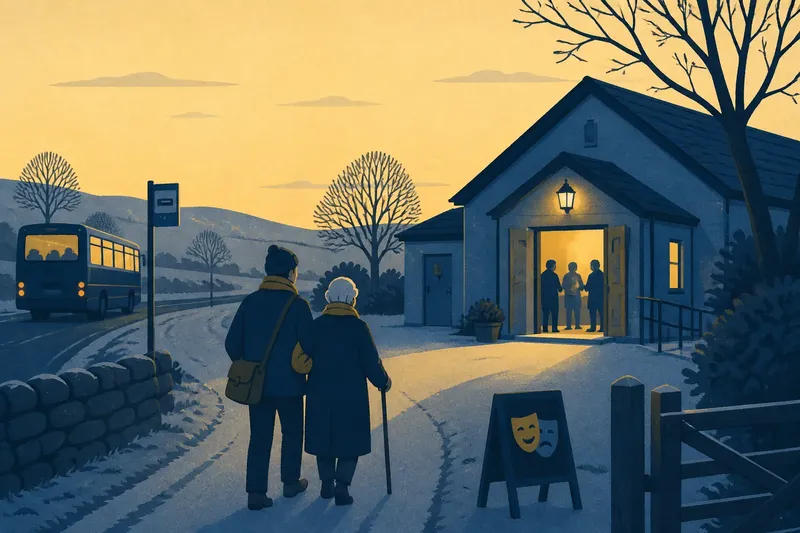
A bus pulls away from the village stop as the afternoon light fades, and the lane to the hall is still ahead. Planning a winter matinee at a village theatre means accounting for that last stretch, the venue’s opening arrangements and the return journey—not just the curtain time.
What makes a village theatre outing different?
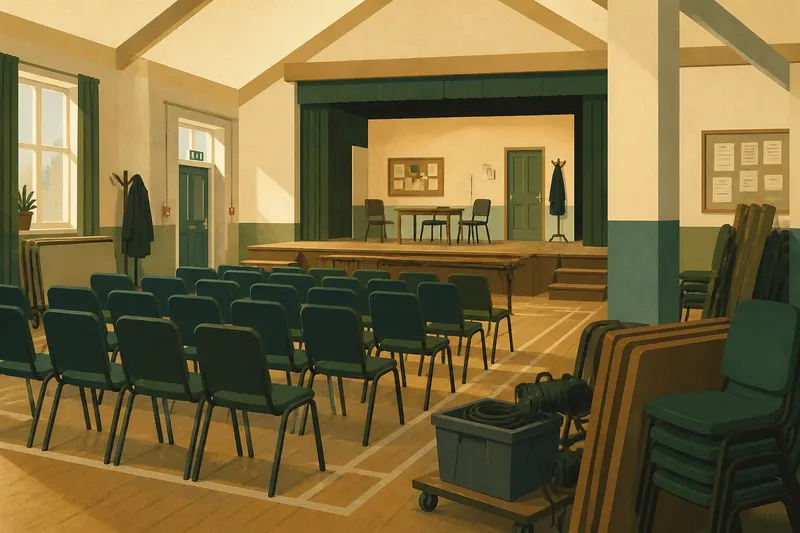
Village performances often take place in a converted hall, school room or local community building rather than a large theatre with a staffed foyer. The entrance may open shortly before the performance, and nearby places to wait may be limited. Check the event information or contact the organiser rather than assuming there will be a warm lobby, cloakroom or café.
The route can also change character near the venue. A bus stop may be on the main road, while the final walk follows a narrow lane or an unlit path. Ask someone who knows the site about the approach, where vehicles can stop and whether there is a suitable place to wait indoors.
Think about the performance’s local arrangements, too. A village pantomime or amateur production may use volunteer stewards and a simple ticket desk. Knowing whether tickets are collected at the door, and where the entrance is, can prevent a last-minute search in the cold.
How should you plan the arrival?
Start with the performance time and work backwards. Check when the hall opens, how long the journey takes, and how you will cover the final walk from the stop or parking place. Add breathing room where a delay would matter, such as before a bus connection or while helping someone across uneven ground.
Choose a waiting place before leaving home. It might be a nearby café, a covered stop, or an indoor space the organiser confirms will be open. If there is nowhere sheltered, aim to arrive closer to the time the doors open rather than building a long outdoor wait into the plan.
Imagine you are taking an older relative to a village hall matinee. The event notice says the hall opens shortly before the performance, the bus leaves you at the crossroads, and the final lane has no pavement. You contact the organiser, learn that a side entrance is nearer the accessible parking area, and arrange a lift from the crossroads. The result is a route with fewer exposed walking sections and a clear place to meet, though it depends on the lift arriving as agreed.
Which local details should you check?
For a small venue, one direct question can settle several uncertainties. Contact the organiser, village hall committee or box office and check:
- Doors and ticket collection: If doors open before the performance and tickets are collected inside, plan to arrive after opening; if not, ask where ticket-holders should wait.
- Entrance and access: If the usual entrance has steps or a difficult approach, ask whether another entrance is available; if none suits, discuss an alternative plan with the organiser.
- Parking and drop-off: If parking is on site, ask where visitors should leave cars; if it is limited or distant, arrange a lift or identify a suitable public alternative.
- Facilities and coats: If the hall has toilets or somewhere to manage wet coats, use those facilities on arrival; if it does not, plan a suitable stop before setting out.
- Refreshments: If refreshments are confirmed, decide whether to use them before or after the performance; if not, bring a modest snack or eat elsewhere.
- Mobile reception and directions: If signal is unreliable, save the route and organiser’s contact details in advance; if the directions remain unclear, ask for a landmark or written approach before travelling.
- Return transport: If a bus or lift has a fixed departure, leave promptly after the performance; if there is no practical late option, arrange a backup ride before the outing.
These checks are more useful than packing for every possible problem. A spare layer and a bag that leaves your hands free may help on a cold walk; carrying multiple bulky items is not worth the effort if there is nowhere to store them.
How do you make the journey home manageable?
Village performances can finish into a quiet evening, when transport options are fewer than during the day. Check the return service and the walk to its stop before travelling. Allow time to collect coats, use the toilet and say goodbye, but do not count on a bus waiting if the performance runs late.
If you are sharing a lift, agree the pickup point and what happens if the show overruns. A named gate or marked car park is clearer than “outside the hall”, especially when several groups leave at once. If a driver cannot wait, choose a sheltered place where passengers can meet them or call for help.
For a rural walk, ask whether the route is lit and suitable for your party in winter conditions. If it is not, arrange a lift or taxi rather than assuming a torch alone will make the walk comfortable. For mobility, access or safety concerns, ask the venue or a qualified local transport provider about options that fit the individual need.
What questions help settle the village theatre plan?
Should I contact the organiser before travelling?
Yes, if the event information does not explain the entrance, doors, parking or access arrangements. A brief call or message can clarify details that are specific to that hall and performance.
Is an early arrival always helpful?
Only if there is somewhere comfortable to wait or the doors will be open. If the hall cannot admit visitors early, choose a nearby sheltered place or time your journey to avoid standing outside.
What should I do if the last bus is close to the finish?
Check with the organiser how the performance’s end time relates to the stop, then make a backup plan. If a late finish could leave you stranded, arrange a lift or another safe way home before setting out.
Should I bring food for a village hall performance?
Ask whether refreshments will be available and whether there is a suitable place to eat. If not, have a snack before the performance or bring something easy to carry, while following any venue guidance.
How can the day stay relaxed?
Keep a few decisions firm: how you will reach the hall, where you will wait if early, and how you will get home. Let the rest depend on the weather and the group. If the hall opens on time and everyone is comfortable, go in; if the lane is difficult or transport changes, use the backup you arranged.
Tell the people travelling with you where to meet and who holds the tickets or journey details. For a village performance, the organiser’s local knowledge can be as useful as the timetable. A clear plan for the hall’s actual entrance and the final trip home leaves more attention for the play itself.