From Mummers to Modern Village Plays: A Tradition in Motion
Mummers’ plays and modern village plays can share a living tradition. Learn how to preserve familiar customs while adapting words and roles for today.
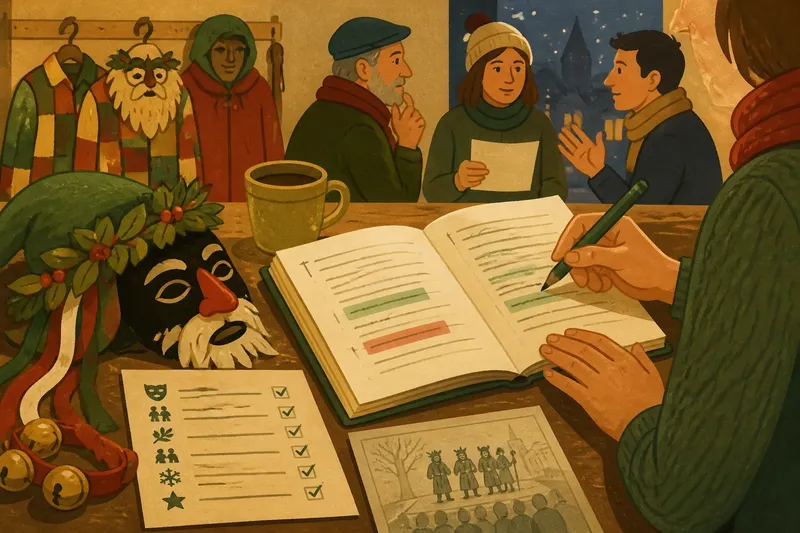
When a village group sets out its costumes for a winter performance, someone may ask whether to keep an old line or make it clearer for the audience. Mummers’ plays and modern village plays offer different ways to carry local performance forward, but neither needs to be treated as the sole authentic form.
A tradition is not only a script handed down intact. It can also be a shared practice: people gather, take roles, make choices and recognise something of their place in the result. That practice can continue through changes to words, cast or setting, provided the group is clear about what it wants to carry forward.
What makes a village performance a tradition?
Repetition and recognition can make a village performance customary, whether its material is old or recently written. A recurring winter play, an annual procession with spoken scenes, or a locally written comedy performed over time may all acquire meaning for a community.
Mummers’ plays are associated with seasonal visits and recurring character types, but versions differ between places and performers. That broad description should not be mistaken for a single standard script or a universal audience response. A group considering a particular version can ask what local records or memories establish about its own history.
Before adapting a performance, ask what people actually recognise. It might be a character, a meeting place, a seasonal occasion or the chance for people from different parts of the village to perform together. Naming that feature gives the group a clearer basis for decisions than a vague instruction to “keep it traditional”.
Should you preserve an inherited version or make a new one?
There are three broad approaches. Each can suit a different community, and none is automatically more faithful than the others.
Keep the inherited version close
This approach suits a group whose members value wording or customs passed down to them. A close revival can help new performers learn material that others remember and can give the audience a sense of continuity. It also lets the group distinguish inherited material from new edits.
Preservation need not mean pretending a text has never changed. Keep a working copy, note who supplied it and mark any edits made for clarity or casting. If a line no longer makes sense, a short explanation may be enough; rewriting a whole scene may not be necessary.
Adapt the text while keeping its recognisable shape
This suits a group that wants to retain a known pattern while making the performance understandable and welcoming to its current audience. It might keep familiar roles, a call-and-response exchange or a seasonal visit, while changing obscure references or sharing a speaking part with someone who would otherwise have no role.
Small edits can accumulate until nobody can say what the group meant to preserve. Before editing, list the features that must remain. Treat other details as open to change, and record the distinction in rehearsal notes or a programme note.
Create a new play from local material
A community might choose new writing because the inherited performance no longer suits its participants or because the group wants to address a local subject. A new script can borrow the rhythm of a traditional exchange, use familiar roles or retain a customary season without claiming to be an untouched old text.
New writing still takes care. Someone must shape the material, check that local references are understandable and decide what should not become a joke. A fresh play may become customary through repeated participation, but it is more honest to describe it as new at the outset.
How can you choose the right kind of change?
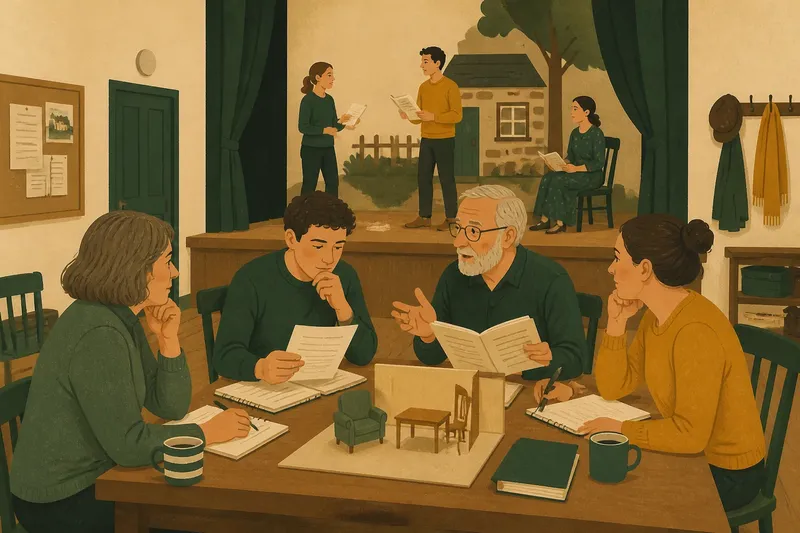
Speak with people who remember the performance and those expected to take part now. Ask what the occasion means to them, which parts they would miss, and what makes it harder for new performers or audience members to join. Then choose the smallest change that addresses a real need.
Say a village group has a winter play with familiar character names and references to a nearby farm that most of its current audience does not know. The group first lists the names and sequence it wants to preserve. It then replaces the obscure farm references with details the audience can recognise and saves the old lines in its archive. The resulting performance keeps its familiar shape, while the audience has a clearer route into the jokes.
That choice may not suit every group. If the old references matter to a long-standing audience, a brief explanation could work better than replacement. If performers feel the inherited format leaves them no meaningful part, a new script may be more honest than a superficial edit.
- Check the inherited wording: if performers and regular audience members value the exact lines, keep a close version; otherwise, consider editing while saving the source copy.
- Check the familiar sequence: if people recognise the order of scenes, preserve it; if it causes confusion, try a revised order and explain the change.
- Check local references: if the audience understands them, retain them; if not, add context or replace them with a relevant detail.
- Check who can take part: if some participants have no meaningful role, adapt the casting or create a new part; if the cast is already inclusive, keep the arrangement.
- Check the occasion: if the season or gathering is central to the custom, keep it; if it prevents people from joining, consider another suitable occasion and record why.
- Check the group’s aim: if it wants to pass on an inherited version, preserve and document it; if it needs to speak about a new subject, write a new script and identify it as new.
It is not worth trying to settle every question about authenticity before the group can rehearse. A short, honest note about the version being performed is often more useful than an argument over whether every line is old enough.
What should you ask before changing a traditional play?
How can a group tell which details matter most?
Ask performers and regular audience members to name the moment, character or custom they would miss. Look for points of agreement, while remembering that one surviving text may not capture every part of local memory.
Can a new script still honour an older custom?
Yes, if the group is clear about what it carries forward, such as a seasonal occasion, a familiar role or an established pattern of audience participation. Describe the script as new rather than presenting invented words as inherited material.
How should a group explain an adapted version?
A concise programme note can identify the source or local memory behind the performance and say that the text has been adapted. Specific wording helps the audience understand the choice without defending every edit.
What if people disagree about changing the play?
Separate the decision about this performance from the choices available to future groups. Preserve an older copy, stage one version now and invite discussion before the next revival, rather than treating disagreement as a choice between change and loss.
How can a group record continuity?
Keep a simple record with the script: the version used, the occasion, the contributors and the changes made. Annotated scripts, cast lists and programme notes can help future organisers choose whether to repeat a version, return to an older one or make another adaptation.
Be specific about attribution. If a local performer supplied lines, ask how they want their contribution described. If a script came from another community, record what is known rather than filling gaps with guesses. Where permission or ownership is unclear, seek appropriate advice before reproducing the material publicly.
Continuity also depends on giving people ways to learn the performance. A brief introduction to unfamiliar characters, a spoken cue for an audience response or a role shared between performers can help people take part without changing the custom’s central character.
Mummers’ plays and modern village plays can both contribute to a tradition in motion, but a group should be precise about which version it is presenting and what it knows of its history. A clear record of what was kept, changed and newly written gives the next performers a sound basis for their own choices.