Why Village Halls Keep Finding Room for Theatre
Village hall theatre can thrive without a permanent stage: plan adaptable layouts, protect everyday uses and make each production easy to set up and clear.
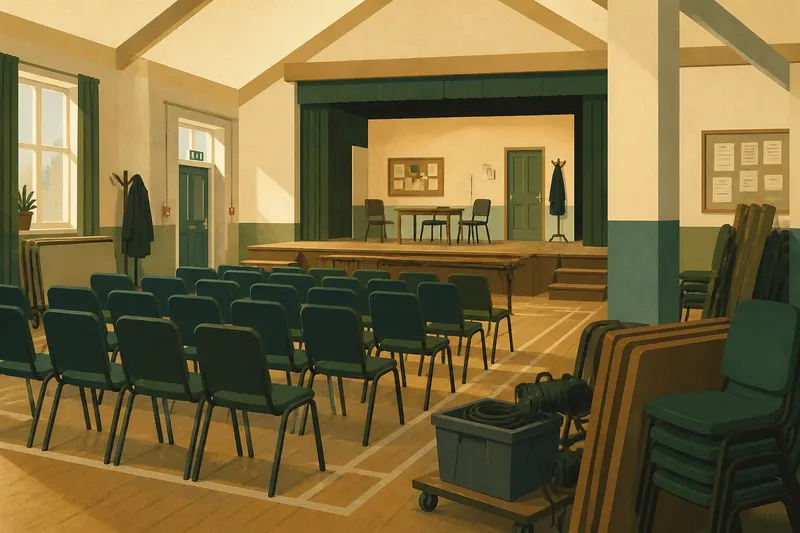
Village hall theatre often begins with a practical question: where can the chairs go without blocking the doors or hiding the performers? In a room used for meetings, dances and jumble sales, the answer has to work for one evening and leave the hall ready for its next purpose.
How does a village hall make room for theatre repeatedly?
The hall’s flexibility depends less on a permanent stage than on a repeatable arrangement. A group can agree where the playing area goes, which chairs and equipment it uses, and how the room returns to its usual layout afterwards. A simple room plan and a storage spot for performance kit make those decisions easier to revisit.
That approach also helps productions fit around the hall calendar. If a meeting or dance follows the performance, the group can choose a layout that is quick to clear. If the hall has a platform or curtains already, they can use them where they help without assuming every production needs them.
Keep the plan practical. Note which furniture can be moved, who is responsible for setting it out, and what needs to be put back. Confirm the hall’s booking arrangements and rules with its organiser before committing to a layout.
Which choices help a room serve both a play and daily use?
Give the playing area a clear edge without trying to rebuild the hall. A table, two chairs and a noticeboard can suggest a village office; a change in lighting or a simple entrance can draw attention to the action. Use only the scenery the scene needs, so it does not take over floor space or make clearing the room harder.
Think about furniture and routes together. Chairs can form shallow, offset rows facing one side, or a modest curve around the action. Keep exits, access routes and performer paths clear, and place spare furniture where it can be returned easily. For fixed seating, equipment or safety requirements, follow the hall’s rules and seek qualified advice where needed.
It is not worth hiding every noticeboard or covering every stack of spare chairs. A tidy playing area and a clear view usually matter more than making a working village hall look like a purpose-built theatre.
How can a group make its setup easier to repeat?
Before arranging chairs, check the room, the performance and the next use of the hall. Each observation should lead to a clear decision rather than an open-ended effort to improve everything.
- Check the playing area against the room plan. If it leaves usable entrances and enough space for the action, mark it for this setup; otherwise, move it before placing chairs.
- Check faces and important objects from the sides and rear. If they remain visible, keep the layout; otherwise, shift the playing area or remove the obstructing row.
- Check that doors, access routes and exits are clear. If a chair or prop narrows a required route, move it; if the route is already clear, leave it open as planned.
- Check what lighting and sound equipment the hall provides. If approved equipment suits the production, use it as directed; otherwise, simplify the staging and ask a qualified person about technical needs.
- Check how soon the room must return to everyday use. If it is needed immediately afterwards, choose furniture and scenery that can be cleared promptly; otherwise, agree a suitable clearing time with the hall organiser.
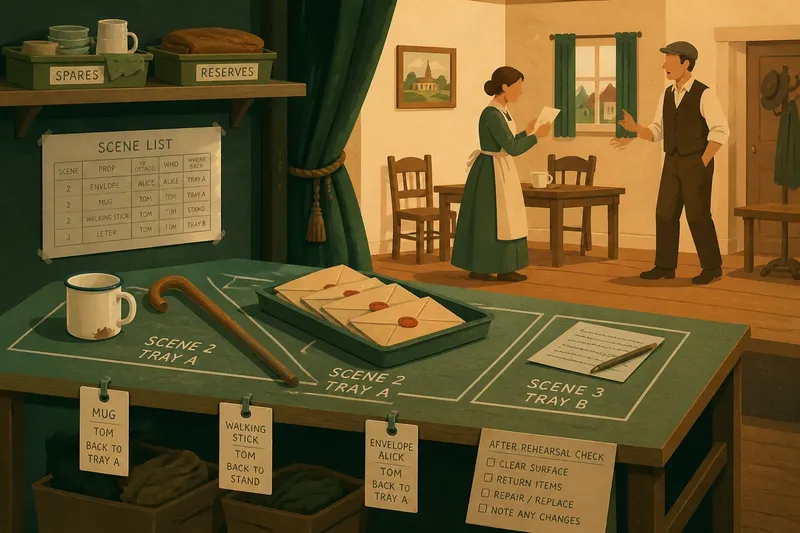
- Check where props and moved furniture will go. If there is an agreed storage place, use it; otherwise, reduce the setup or arrange storage before the performance.
- Check who will restore the hall. If named helpers are available, assign the clearing tasks; otherwise, simplify the layout until the group can put the room back responsibly.
What does a repeatable setup look like in practice?
Imagine a group preparing a residents’ meeting scene in a hall with a low platform, with a dance booked after the play. Their invented starting point is a table and three chairs on the platform, a noticeboard behind them, and a plan to seat the audience in straight rows. They first check the room plan and leave the hall’s exits and access route open. From the rear seats, they then notice that the table hides one performer’s face, so they move it back and remove one chair. They try the view again; if the faces are clear, they keep that arrangement, and if not, they shift the audience block or playing area before adding props. Finally, they agree who will return the chairs and clear the platform for the dance. The result is a scene the audience can follow and a room with a straightforward route back to its next use.
What questions do organisers ask about village hall theatre?
Does a village hall need a raised stage?
No. A floor-level playing area can work if the audience can see faces and movement. A platform may help in some rooms, but consider its access, edges and sightlines before using it.
How can a group store theatre equipment between bookings?
Ask the hall organiser which storage is available and what may be kept there. If there is no suitable space, favour props and equipment that can travel with the group rather than leaving items in the hall.
How can the hall return to everyday use after a performance?
Agree in advance what must be moved, where it belongs and who will do the work. A clear room plan and a small, consistent set of props can make the changeover easier to manage.
What if a pillar blocks some audience seats?
Change the playing area or seating before accepting a blocked view. If a seat still has a restricted sightline, make that clear and avoid relying on it for an important moment.
How do you know the room is ready?
Walk the space from audience height and check the view from the sides and rear. Confirm that the entrances work, routes remain clear and speech can be heard across the room. Then make sure the group knows how the hall will be restored after the performance.
Village hall theatre keeps finding room when the setup suits both the play and the hall’s next use. A clear plan, a small amount of adaptable equipment and an agreed clearing routine let each production make its mark without claiming the room for good.